Nova Scotia Fish Cakes with Smoked Haddock


There are foods that belong to restaurants, and foods that belong to kitchens. Fish cakes firmly belong to kitchens.
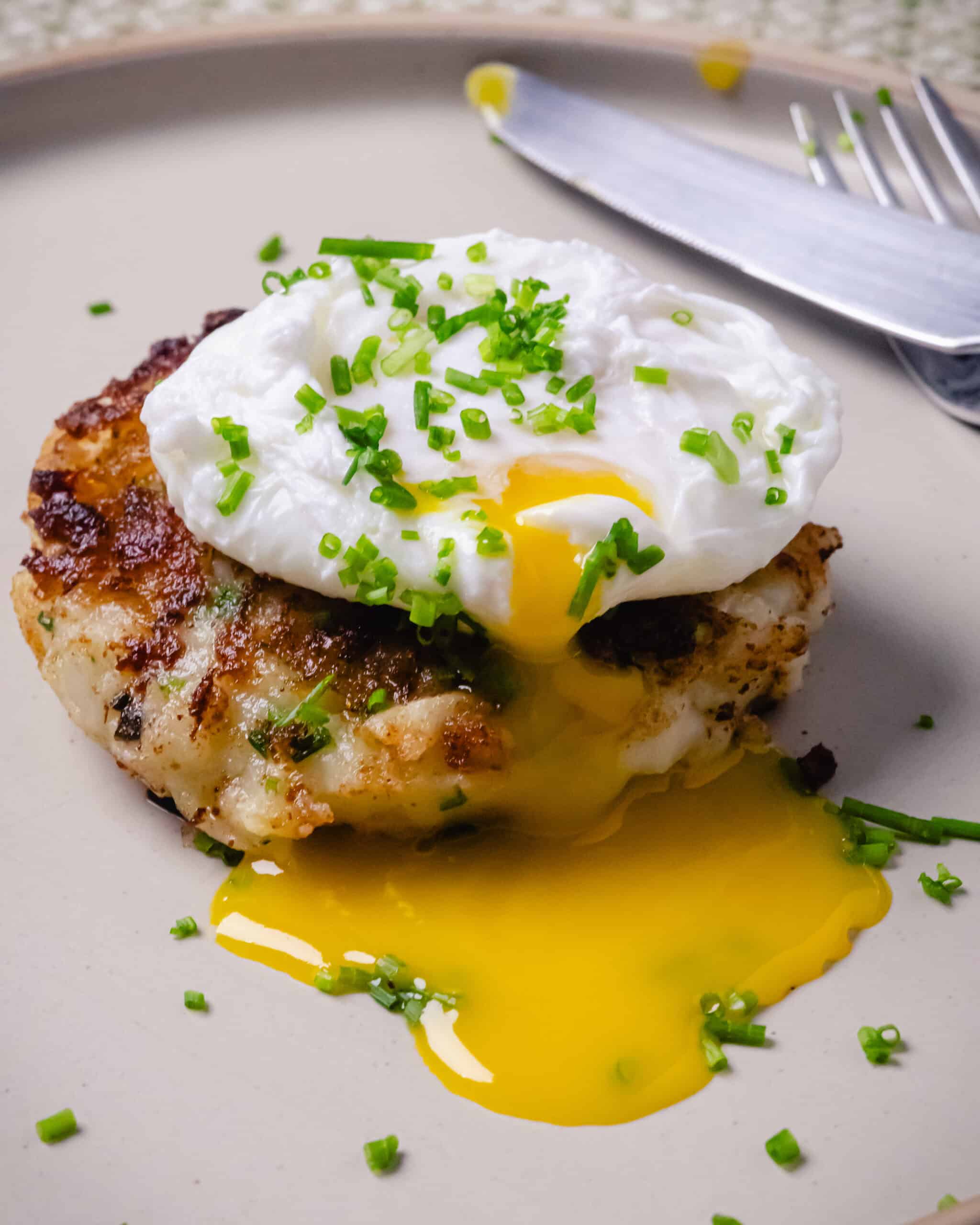
Made with smoked and unsmoked haddock, fluffy potatoes, and fresh chives, these fish cakes with smoked haddock are the sort of thing that have appeared on Nova Scotia tables for generations. Crisp on the outside, soft in the middle, and equally happy beside baked beans or under a poached egg, they manage to feel both humble and deeply satisfying.
They’re also a useful reminder that not every recipe needs improving. Sometimes three good ingredients are more than enough.
In This Recipe
Why You’ll Love These Fish Cakes
- Made with just a handful of ingredients
- A good balance of smoked and unsmoked haddock
- Crisp golden exterior with a soft potato centre
- Easy to make ahead for busy weeks
- Equally suited to breakfast, lunch, or supper
- A classic Atlantic Canadian comfort food
- Freezes beautifully
The Fish Cakes I Grew Up With
Growing up in Nova Scotia, fish was simply part of life.
At least once a week there were fish sticks somewhere in the rotation, but fish cakes were always the ones people seemed happiest to see. They felt slightly special, despite being built from ingredients that were anything but expensive.
A trip down to Eastern Passage could still land you a plate of two fish cakes with chow and baked beans for about five dollars. The fish cakes arrived hot and crisp from the griddle, the chow sharp and sweet, the baked beans doing their dependable job in the background. It wasn’t fancy food. Nobody wanted it to be.
What strikes me now is how complicated many fish cake recipes have become.
Some contain enough ingredients to start their own vegetable garden. Others seem determined to disguise the fish entirely. Which raises an obvious question: if haddock is the star of the show, why spend so much effort hiding it?
This version takes the opposite approach.
The base is simple: potatoes, fish, and chives.
For the potatoes, I use russets because they mash beautifully and create a soft interior. For the fish, I use a mixture of smoked and unsmoked haddock. Smoked haddock is one of the great underappreciated ingredients on this side of the Atlantic. The combination gives the cakes enough smokiness to be interesting without overwhelming the delicate flavour of the fish itself.
The chives come from the garden whenever possible. They add just enough colour and onion flavour to wake everything up without becoming the centre of attention.
The result is a fish cake that tastes very much like the ones I remember: simple, crisp, and comforting. The sort of thing that doesn’t need explaining once it’s on the plate.
What Makes Nova Scotia Fish Cakes Different?
Across Atlantic Canada, fish cakes change depending on where you happen to be standing.
Traditional Nova Scotia fish cakes often use fresh haddock, smoked haddock, or a combination of the two. The result is a lighter texture and a cleaner fish flavour than many salt-cod versions found elsewhere.
Like much of East Coast cooking, the emphasis is on good ingredients rather than long ingredient lists. Potatoes, fish, and a handful of herbs have been doing the job quite nicely for generations.
Nova Scotia Fish Cakes vs Newfoundland Fish Cakes
Traditional Newfoundland fish cakes are often made with salt cod, potatoes, and onion.
Nova Scotia fish cakes, by contrast, also tend feature fresh haddock or smoked haddock. While both styles are rooted in Atlantic Canada’s fishing traditions, Nova Scotia versions tend to have a softer fish flavour and a lighter texture.
This recipe follows the Nova Scotia tradition, using smoked and unsmoked haddock rather than salt cod. Although, fresh cod is also frequently used, as it is delicious.
Why Smoked Haddock Makes Better Fish Cakes
Smoked haddock brings something special to fish cakes.
Used on its own, it can occasionally overpower the potatoes. Combined with fresh haddock, however, it adds depth, savouriness, and a gentle smokiness without taking over the plate.
It’s one of the reasons these smoked haddock fish cakes feel distinctly Maritime.
How to Make Fish Cakes
At their heart, fish cakes are remarkably simple.
Most traditional fish cakes are made by combining cooked fish with mashed potatoes, shaping the mixture into patties, and frying them until crisp and golden. The challenge isn’t complexity—it’s balance. Too much potato and the fish disappears. Too much fish and the cakes can struggle to hold together.
This version uses equal parts smoked and unsmoked haddock mixed into warm mashed potatoes with fresh chives. After a short rest in the refrigerator, the cakes are pan-fried in butter and oil until a crisp crust forms on both sides.
The result is exactly what a good fish cake should be: crisp on the outside, soft in the middle, and unmistakably fish-forward.
Ingredients
For the Fish Cakes
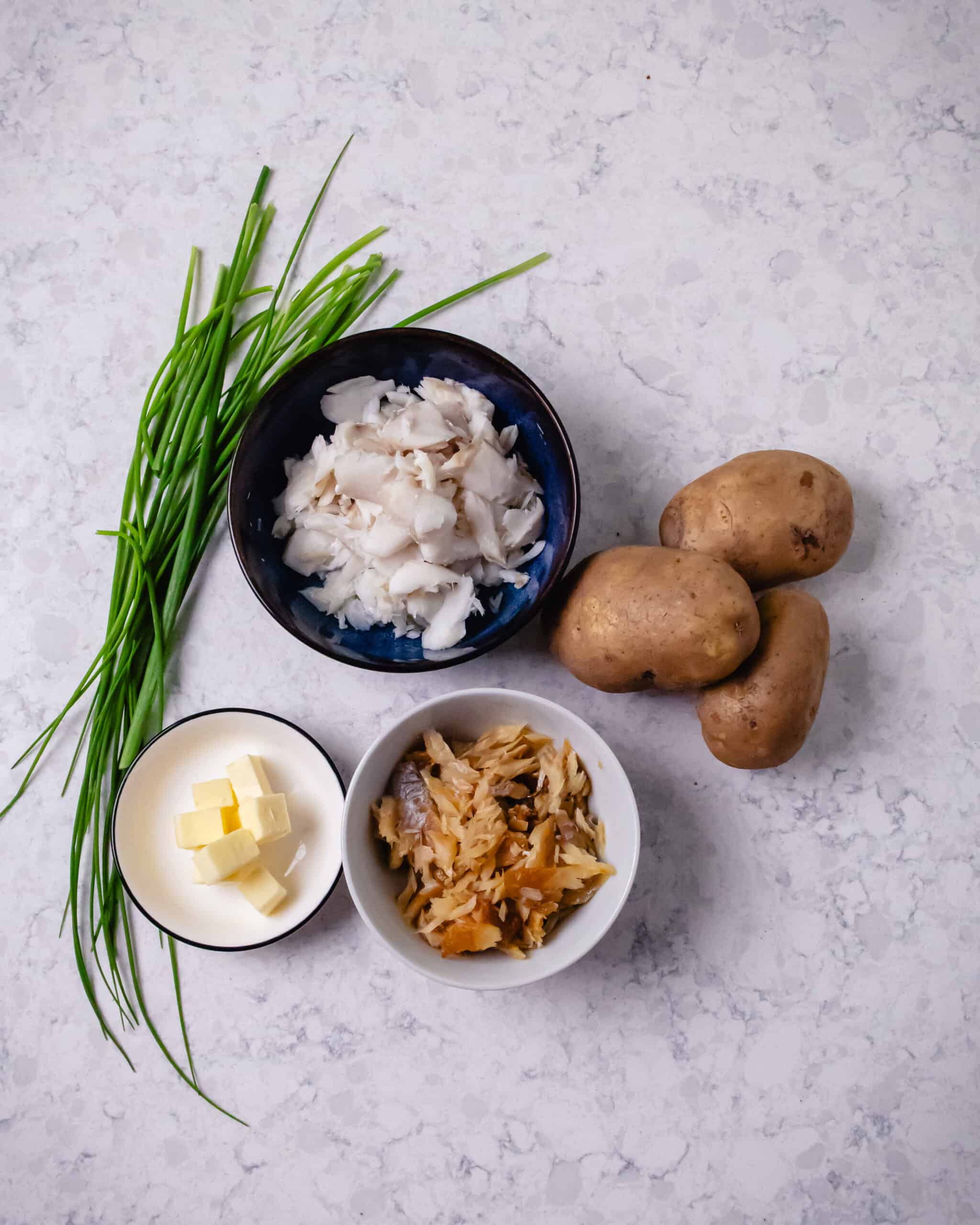
- 3 lb russet potatoes, peeled and diced
- ½ lb cooked haddock, flaked
- ½ lb cooked smoked haddock, flaked
- ¼ cup fresh chives, finely chopped
- 2 tablespoon butter
- 2 tablespoon vegetable oil
- Salt and pepper, to taste
Method
- Place the potatoes in a large pot and cover with cold water. Bring to a boil and cook for about 15 minutes, or until a fork slides easily through the centre.
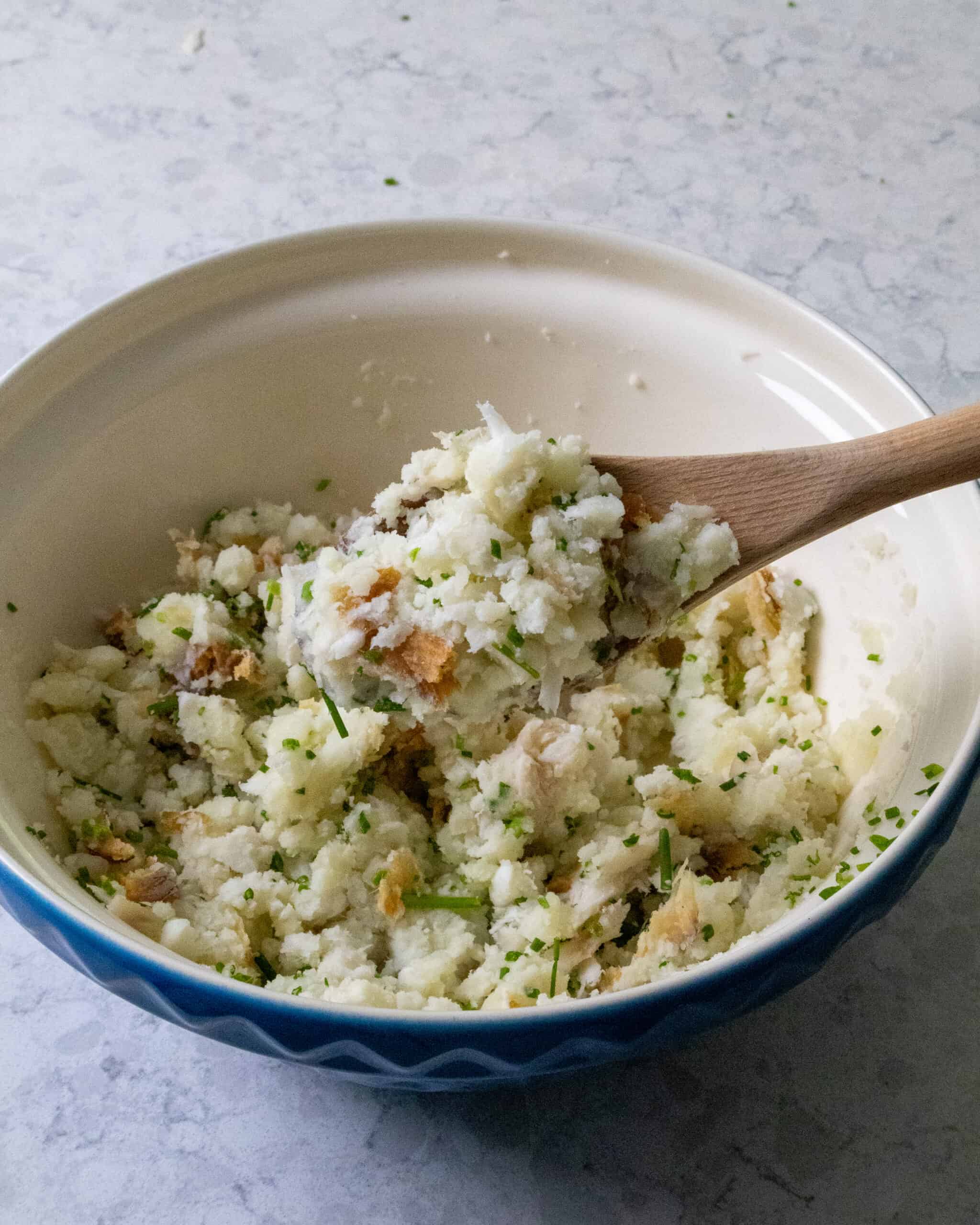
- Drain well and mash while still hot. A potato ricer will give a smoother texture, while a traditional masher leaves a few lumps, which I rather like.
- Stir in the haddock, smoked haddock, and chopped chives. Season lightly if needed.
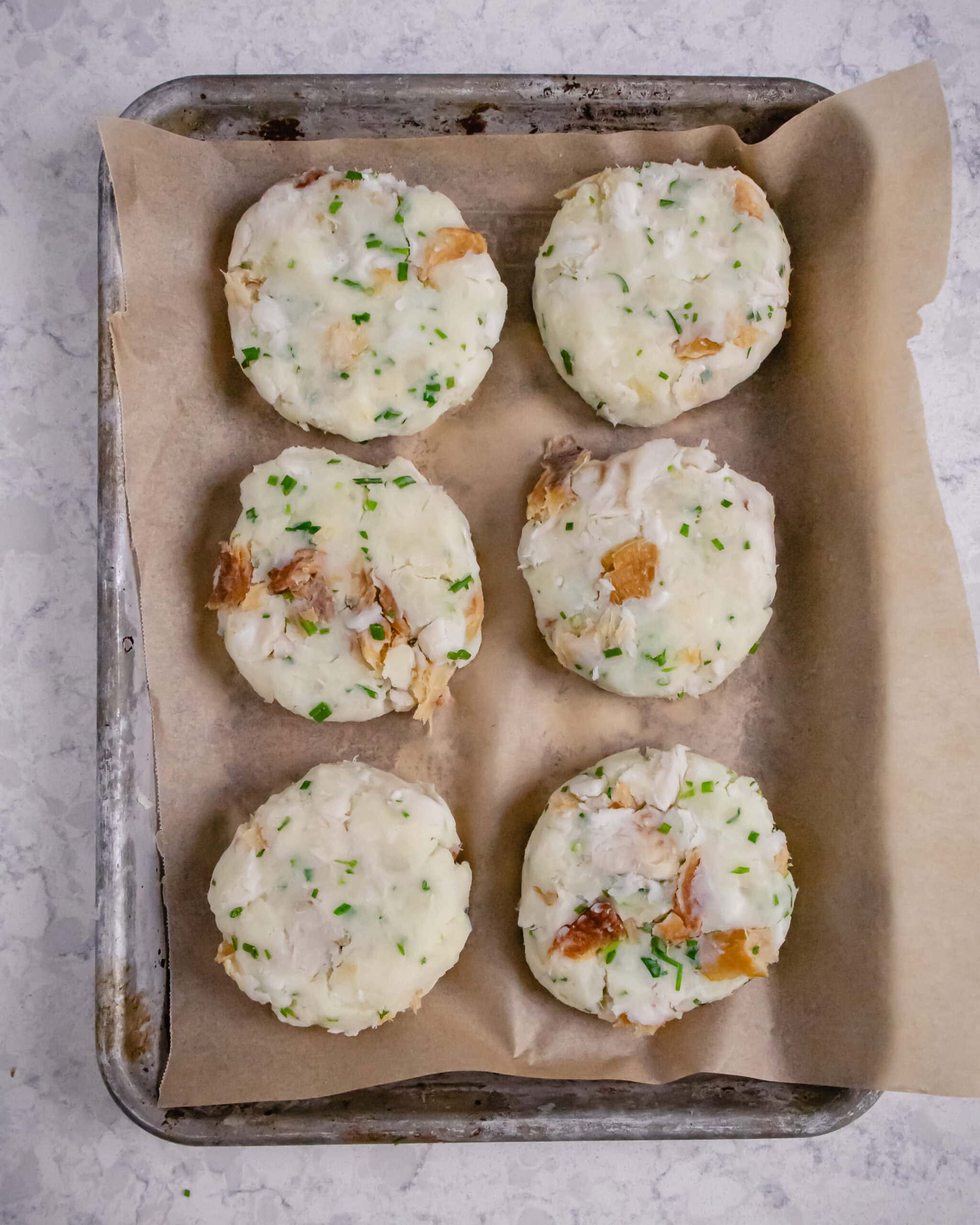
- Using an ice cream scoop or large spoon, portion the mixture and shape into cakes roughly the size of a hockey puck.
- Place on a baking sheet, cover, and refrigerate for at least 15 minutes. Overnight is even better.
- Heat the butter and oil in a frying pan over medium heat – strongly recommend using a non-stick pan like these HexClad ones.
- Cook the fish cakes for 5–10 minutes per side, leaving them undisturbed until a golden crust develops. Flip carefully and cook the second side until equally crisp.
- Serve immediately while warm.
A Few Small Tips Before You Start
- Don’t overwork the mixture. Gentle handling keeps the fish flakes intact.
- Chilling the cakes before frying makes them much easier to flip.
- Dry potatoes make better fish cakes, so let them steam for a minute or two after draining.
- If your smoked haddock is particularly salty, taste before adding extra seasoning.
What Else Works Here
A little grated cheddar can be added if you like a richer fish cake, though I generally leave it out.
Parsley works well in place of chives when the garden isn’t cooperating.
If smoked haddock is difficult to find, use all regular haddock, though you’ll lose some of the character that makes these special.
For a slightly firmer texture, add one beaten egg to the mixture before shaping.
What do you serve with fish cakes?
These are at their best with traditional East Coast accompaniments:
- Green tomato chow
- Homemade molasses baked beans
- A softly poached egg
- Buttered brown bread
- Pickled beets
- Simple salad like a blueberry spinach salad
For brunch, a fish cake topped with a poached egg feels like a particularly good decision.
For supper, baked beans and chow remain difficult to improve upon.
Storage & Make-Ahead
Uncooked fish cakes can be shaped and refrigerated for up to 24 hours before frying.
Cooked fish cakes will keep in the refrigerator for 3 days and reheat well in a frying pan.
They also freeze beautifully. Freeze in a single layer, then transfer to a freezer container for up to 3 months.
Can You Freeze Fish Cakes?
Absolutely.
Once shaped, the uncooked fish cakes can be frozen on a baking sheet before being transferred to an airtight container. They will keep for up to three months.
Cooked fish cakes also freeze well and can be reheated directly from frozen.
A Few Small Tips Before You Start
Why Are My Fish Cakes Falling Apart?
Usually, the mixture is too wet or hasn’t been chilled long enough. Warm fish cakes are delicate. Fifteen minutes in the refrigerator makes a surprising difference.
Can You Make Fish Cakes Ahead of Time?
Yes. Shape the cakes up to a day ahead and keep them covered in the refrigerator until ready to fry.
What Fish Is Best for Fish Cakes?
Cod or Haddock is the classic choice throughout much of Atlantic Canada and New England. Smoked haddock adds extra depth without requiring additional ingredients.
Can I use fresh haddock instead of smoked haddock?
Yes. The fish cakes will still be delicious, though you’ll lose some of the smoky depth that makes this version distinctive.
Can I used cold mashed potatoes
Warm mashed potatoes are much more pliable and easy to form, cold mash will likely fall apart on you or need a binder like egg.
Related Recipes
- Nova Scotia Oatmeal Molasses Bread
- Molasses Baked Beans
- Classic Nova Scotia Fish Chowder
- Traditional Oatcakes

Nova Scotia Fish Cakes with Smoked Haddock

Ingredients
- 3 lb russet potatoes peeled and diced
- ½ lb cooked haddock flaked
- ½ lb cooked smoked haddock flaked
- ¼ cup fresh chives finely chopped
- 2 tablespoon butter
- 2 tablespoon vegetable oil
- Salt and pepper to taste
Instructions
- Place the potatoes in a large pot and cover with cold water. Bring to a boil and cook for about 15 minutes, or until a fork slides easily through the centre.
- Drain well and mash while still hot. A potato ricer will give a smoother texture, while a traditional masher leaves a few lumps, which I rather like.
- Stir in the haddock, smoked haddock, and chopped chives. Season lightly if needed.
- Using an ice cream scoop or large spoon, portion the mixture and shape into cakes roughly the size of a hockey puck.
- Place on a baking sheet, cover, and refrigerate for at least 15 minutes. Overnight is even better.
- Heat the butter and oil in a frying pan over medium heat.
- Cook the fish cakes for 5–10 minutes per side, leaving them undisturbed until a golden crust develops. Flip carefully and cook the second side until equally crisp.
- Serve immediately while warm.